Showing posts with label Middle East. Show all posts

Sunday, April 21, 2013

Unofficial Travels


The view from Bhutan, complete with Buddhist prayer flags
If you have forgotten, having not seen me in a long time, I have blue eyes, dirty-dishwater brown hair (which is currently red, thanks to henna), and light beige skin (so says the make-up I use). I am hardly one of those people who could be from anywhere, and yet many times in several different Asian countries, I have been told that I could pass for a local—Egypt, Syria, India, China (OK, just kidding about the last one, although I was mistaken for a Chinese person on the phone a few times, which was very flattering. Chinese people were more impressed by the differences in my appearance—my protruding nose, the three folds in my eyelids. Apparently, that’s a sign of beauty, but to me it means that I’m probably going to end up like my grandfather who had surgery a few years ago to remove excess eye-skin that was impeding his vision.).  In the Middle East, it wasn’t too much of a stretch for me to be a local. As Joanna used to point out, there’s a lot of Crusader blood mixed in there…but when I was told I could pass as a light-skinned Indian, I admit that I was a bit skeptical. 

My hand is in Bhutan
It started a few weeks ago when I was planning a trip to the Bhutan border area for work. I knew the partners I was going to visit are well-connected in the area, and I thought, “Why not ask if they could get me in to Bhutan for a day?” Those of you unfamiliar with the Bhutanese immigration policies may not know why that is a big deal. Last time I was in the area, a mean-looking lady refused to let me even set one foot across the border into her homeland, since foreign tourists (i.e. not Indians) must have very expensive permission to enter. In protest, I stuck my hand through the fence and took a picture. Why did I not just get the permission to enter? Because I am not that rich. To go to Bhutan, an American tourist (and I believe it is the same for other Western nationalities as well) must pay $220 per day and stay at least 7 days. That equals $1540 (I think) and I don’t have that kind of money or 7 free days, for that matter.  But I had heard rumors that there was a way to get one-day permission to enter. So I asked the partners, and they, being SOOO happy that I was finally coming to visit again, agreed to arrange the permission for me. I brought along my passport and extra passport photos in order to be prepared for whatever information they might need from me. OK, fine, I always bring my passport with me whenever I travel, and I always keep extra passport photos in my wallet. Yes, some of them were taken almost 10 years ago, but that’s the benefit of never growing up—I still look mostly the same.

After completing my work in the area (and that was awesome, too bad I don’t have time to tell you about that here), we drove to the border town of Jaigaon. Jaigaon is technically a part of Bhutan, but the Indian government is renting it from them. I’m not sure why they want to do that, but maybe that is easier than building another entry gate into the country, since the British already messed up the boundary there a while ago. Still, I don’t count it as being in Bhutan because I didn’t officially go through the gate. I did buy oleh-olehs for the niece and nephews though, and I will count those as being from Bhutan, especially since I got back some Bhutanese money as change.

With my bodyguards
We stayed in Jaigaon overnight, waiting for the government official friend of the partners to arrive. We met the next morning at breakfast. He asked me about my passport and visa, we hopped in the car and headed to the Indian immigration office where I handed over my passport. At this point I still thought that my passport would be involved in getting me in the country, but I was wrong. My passport would not be going with me to Bhutan. When I found out, I felt a bit disloyal leaving it behind—my passport and I are great friends, and we go everywhere together. I also kind of wanted a Bhutanese stamp, but not enough to pay more than one thousand dollars for it.

As we drove up to the gate, the Indian immigration official riding in the front seat of the fancy government SUV we were in, turned around and said to me, “Don’t tell anyone you are from America.”

I said, “OK, but won’t they figure that out when they see my passport?”

He said, “Your passport is back at the immigration office. They won’t see it. Also, speak only in Hindi.”

That’s when I realized that the success of our plan was based on tinted car windows and my Hindi ability. Also powerful Indian government officials who assured me that Bhutan can’t really get mad at them because everything in Bhutan comes from India, including their religion (which originated in Bihar, fyi).

I did it! Walking on Bhutanese soil!
So we casually drove through the border, not even bothering to stop for the Bhutanese soldiers, and it was completely no big deal at all. We drove through the little town of Phuentsholing where there were actually quite a few foreign tourists wandering around. The partner with me mentioned that they didn’t look too happy, and I’m pretty sure they were thinking about their rapidly dwindling bank accounts back in their home countries. Meanwhile, I hopped in for free, escorted by an immigration official, an Indian government representative, and his two bodyguards. We drove up the mountains to a famous Buddhist temple next door to one of the queen’s palaces.


We wandered around a bit, and I had just posted a ‘success’ photo on Facebook when the immigration guy turned to me and said, “Oh yeah, don’t tell anyone about this for two days.” I’m not sure why, but I deleted it, in case any of my Facebook friends are Bhutanese officials in disguise. And then I waited two days to write this…also I may have waited two days because I’ve been traveling and I’m tired and I didn’t feel like writing…

While Bhutan and India share a border, these two notices found in Bhutan in the language of the people they were directed at, speak to vast cultural differences between the two neighbors:
In Dzongkha (Bhutanese language), people are warned about releasing pigeons...compare to the sign below written in Hindi:

Here people are warned not to "urine or toilet" around the monastery...and my Hindi is particularly good in the area of toilets, so I know that the Bhutanese writers spelt "urine" wrong in  Hindi.

Bhutanese man spins the prayer wheel 
Going up the mountain 
All too soon it was time to go. We piled back into our fancy SUV, which is so fancy it talks to you and gives advice like “the car is starting now. For your safety, it is recommended that you fasten your seatbelt.” But of course, much like we ignored Bhutanese immigration law, we all ignored the car’s advice as well.   Then the Indian government official ignored us when we told him that we could only take a quick side trip to a project site he wanted to show me, and he took us on a journey that involved a 30 minute drive to and from, plus a 45 minute hike up and down a mountain and three 30 minute meetings with a large number of people we didn’t know at all and several tea breaks. It was OK, though, because I got to hike up a mountain on the Bhutanese border with some heavily armed Indian soldiers.


So the moral of the story could be “Never give up on your dreams” or maybe ‘Where there’s a will, there’s a way” or “Don’t Be Afraid to Use Your Wasta (an Arabic word meaning something like ‘having good high-up connections in government/business/relationships/etc that can get you want you want with minimal trouble to yourself).” Those are all great mottos for all of you, but for me it’s probably “Go to as many countries as you can, as cheaply as possible.” Also, Bhutan has a really cool flag with a dragon on it, and I've always wanted to go there.


Bhutanese schoolgirl, in uniform, admiring the view while waiting for her bus


Saturday, December 15, 2012

A collection of thoughts on my life before I head back to the States...not in any particular order...


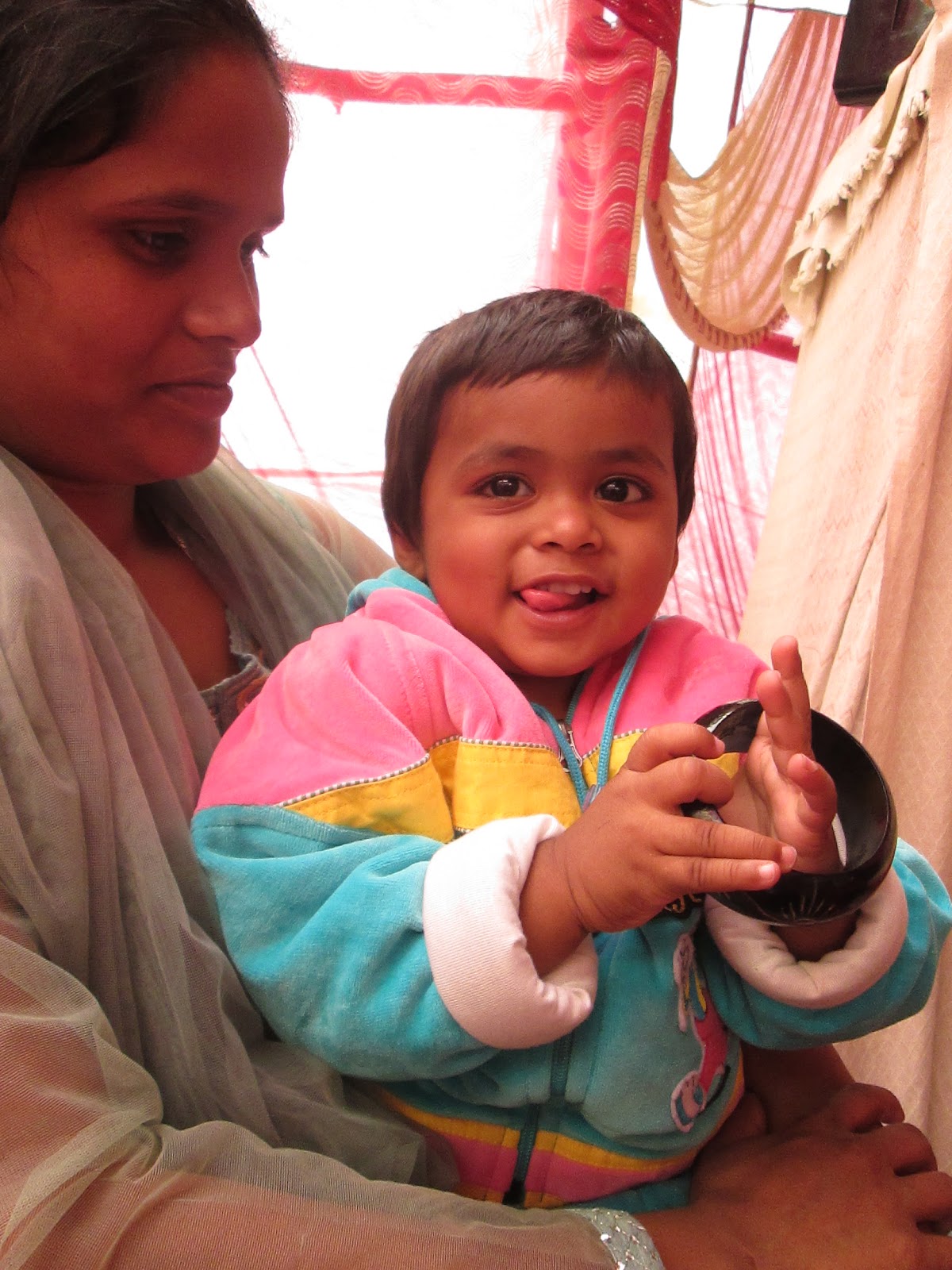
 Traumatic events build unbreakable bonds between people. So do extra-long church services, I think. When I first met Sam, I was smitten but he was indifferent—not afraid, but uninterested. An hour into the service when he was being unwillingly pinned down in his mother’s arms, he became intrigued by me and my bracelet. Later when he was about to scream during the sermon, his mother, also initially hesitant about my presence in the chair next to hers, ripped the bracelet off my arm (where I had returned it once because Sam had been more interested in the cookie his mother pulled out from her purse) and handed it to him like a pacifier. It surprised me at first because it shocked me out of my deep thoughts about the sermon (of course) and trying to figure out if I had calculated my arrival date to the US wrong (I had), but it made me feel like part of a family in which no one has any embarrassment about taking what they need from someone else. And now Sam and I are pals.
Sam, his mother, and my bracelet

Strikes in India involve women in colorful saris wandering down the streets yelling into megaphones and carrying signs. It reminded me of the sister suffragettes and “votes for women” was running through my head even though this strike wasn’t about votes it was something about farming…if you have never seen Mary Poppins, you will have no idea what I am talking about. If you have seen it you may remember more of the “votes for women” song than I do—since that is the only bit that I remember.

Can you see the line of striking women? I took the photo from inside a store.
India (at least this part of India) doesn’t have our Western Christmas songs translated and installed in their appropriate church-song repertoire—at least not that I have heard and not that the two men I asked about it today knew.  Maybe that’s because I haven’t attended a Baptist church yet, but I am strangely disappointed by that even though I know that it is way more culturally appropriate for them not to have to sing awkwardly translated songs. But translated songs are great ways to have guitar sing-a-longs where everyone can sing whatever words that they want. Also translated songs are great for learning new vocabulary. Also I think it’s fun to sing songs in a multitude of languages. But Indian praise songs are enjoyable too, so I’m ok. If I don’t learn “Joy to the World” in Hindi, it’s fine.

India moving companies are only allowed into Patna after 11:00pm. My movers arrived a 12:30am and unloaded a large truck full of stuff from the Kolkata office.  It took 2.5 hours and left me with a house full of boxes and furniture. I walked around sideways like a crab for days.  We opted for a less sophisticated but equally effective option for moving the stuff into the new office: a parade of bicycle rickshaw drivers. I was told that they would arrive at 5am to get an early start. When I woke up with my alarm at 5am, I realized how dumb of me it was to actually believe that they would show up on time, so instead I called my mom and asked her for a recipe for something to make to serve them while they were in and out of my house carrying stuff.  As I get older, I’m realizing more and more what Asian/Jennie Stillman etiquette that has become deeply engrained in me. Most of that etiquette has to do with food, which is why I’m constantly baking these days to make sure that I never send someone’s plate back to them empty. And people keep giving me food, which is great but not actually a time-saver for me. On a related note, I kept thinking how awesome it was that I could call my mom at 5am and know that I will only be interrupting her dinner, not her sleep.  My phone etiquette, which I probably didn’t receive from Asia (which has no phone etiquette) or my mother (who would never call someone during dinner), was totally ok with this.  And while maybe 1 or 2 bicycle rickshawers were brave enough to try the beautiful cinnamon rolls, I ate them for the rest of the weekend that I spent running to and from the office without a second to spare for cooking food.


I have become wonderfully adept at small home improvements—these are improvements of things that no one else would naturally think of as things that need to be improved. That is why I can’t think of anyone in particular to call to help me with these things. You know, you can call a plumber if your sink is leaking or a mechanic is your fridge is buzzing. Who is the person you call if you need to unscrew a light bulb that is in the way of a giant lighted glass display case for fancy dishes with extra drawers underneath that you want to move? I couldn’t think of the name either, so I climbed up on a chair, and unscrewed it myself with my pocketknife because of course I don’t have any tools. And that is generally where I end up when doing home improvements: on a chair with a pocketknife unscrewing something.  And my pocketknife is one my dad got for me two Christmases ago as a free gift at a Christian bookstore in Indonesia. It says “Halleluya” on it. It isn’t one of those awesome chunky ones with tweezers, scissors, a retractable hammer, and a cappuccino maker. So clearly, it is the awesome person who is wielding it (yes, I mean me.) who has all the skills. I recently unscrewed two showerheads and then re-screwed in the one that was better in its original state, as I personally believe that one big stream of water pounding on one’s head is better than a tiny trickle spitting out in several scrawny drips.  Moving the large glass display case may have been trickier than unscrewing the light bulb and light blub socket and prying it out of the paint, but it had to be done.  Otherwise my washing machine would have to sit in the middle of the dining room. Now it can be barely wedged between the sink (yes, there is a sink in the dining room for post-dinner-eaten-by-hand-hand-washing) and the glass display case.  Of course, I still have to move it out to the balcony before using it to stuff the drainage pipe down the balcony drain so that the water doesn’t explode all over my house.  I learned this the hard way—by experience. My first load of laundry extended that day’s house chores to cleaning the floors and drying the furniture. I also made a dam out of an old table cloth that I found.to keep the water from getting into other rooms. I kept thinking to myself, “There must be SOME ingenious way that I could force the water to go out on to the balcony and then drain outside.” And I considered building a channel to redirect the water outside with cookie sheets (I am always in favor of using kitchen tools for multiple purposes.), but then I remembered that I only have one cookie sheet and a channel has two sides. I was wracking my brain for various water-proof objects that I could line up and use to trap water when I realized that I could pick up my washing machine and carry it a little closer to the balcony and the plastic tubey thing would reach the drain of the balcony.  Another brilliant solution to my house-keeping needs.

While I was in Sri Lanka I was informed that I have taken to doing the Indian head-nod. I am like a chameleon. I can adapt and change and morph no matter where I am. In the Middle East, I clicked my tongue and raised my eyebrows for ‘no’. And now I shake my head side-ways like a bobble-head doll outside in a hurricane.  I can’t say that it just happened. Initially, I worked on the skill and at least once I was told I was bobbing excessively. Now, however, I am pretty sure I’ve mastered the exact amount of tilt and shake. At least there have been no more comments about my head-nodding now.  I imagine I’ll get a few if I happen to use this new skill in the States though…

And now, here’s a photo of a goat in a rickshaw:

Friday, November 16, 2012

The Single Ladies Package


When I come to Ranchi for work, I usually stay in a church guest house. Ok, until now, I have always stayed in that church guest house. And I don’t mind. It’s rustic, but I know the people and they’re sweet and we speak Hindi together somehow.  I do admit that this last time I was less excited about being there. It was Diwali and the air was filled with fireworks and loud talking, and my windows wouldn’t close, so it was noisy and cold and filled with mosquitos. Fortunately, I am great at rigging up the mosquito netting and I had mosquito repellent sprayed all over my hands and feet (the most likely part of me to get stuck out of the mosquito net at night while I’m sleeping), so that wasn’t the worst. Actually, the worst was that there was no hot water, and it is now cold in Ranchi. So I was thinking about how bad it would look for me not to shower for a week…and then I broke an app on my iPad so I knew that I needed wireless internet to fix it because the point of my having this iPad is to use this app to document stuff in the field, and I’d already made my coworker in the States make me a special form to document this week’s trip. So I asked the head of the guest house and church, a jolly Indian man whom I love, where I can get wireless in Ranchi. I was informed that the Capital Residency Hotel was the only place and I would have to spend the night there. So he packed me up and sent me over.

And here I am and it is a FANCY hotel. I was greeted by 10 people at the door with “Namastes” and “Hello Madams.” They all wore festive uniforms. I was served a special green drink which I hoped was mint lemonade like I used to drink in Yemen. But it was some horrible salty mango juice drink which I could not choke down.

After I checked in, I went to my room, and I had a call on the phone. Here is a transcript of our call.

Reception: You checked in as a single lady. We must give you the single lady package.

Me (having lived too long in the Middle East, thinking that I was going to have to register specially as some kind of unmarried woman without an escort): Um...what?

Reception: The single lady package! We must give to you.

Me (still uncertain and slightly concerned): What is the single lady package?

Reception: We have a bag to give you and we must change your sheets.

Me (thinking that the room looked immaculate and the sheets were very clean and tucked in extra-tight, hotel-style so that it takes all your strength remaining from a hard day of work to rip them back enough to crawl in): What's wrong with my sheets?

Reception: You are a single lady. You must have pink sheets.

Me: Uh...no...I don't need pink sheets. These white sheets are fine.

Reception: No, we will change.

Me: No. I do not need it. I like white.

Reception: What about Single Lady package? Can we bring you the bag?

Me: Sure, whatever. I really need a toothbrush. Can you bring me a toothbrush? (I forgot mine and I'd been using my finger since all the stores were closed because of Diwali).

Reception: Oh Madam, dental kit costs 30 rupees. 

Me: Fine. I need it.

Reception: Can we come and bring Single Lady Package?

Me: OK. Thik hai.

Ten minutes later there is a knock at the door and a lady arrives carrying the dental kit, a receipt for me to sign, and a fancy travel bag full of must-haves for Single Ladies: pads (of course), nail polish, nail polish remover, a thing like a knife which I assume is a fancy nail file, fingernail clippers in the shape of a foot with sparkles on it (I love it), Nivea strawberry lip gloss (I may love this more than the sparkly foot), tweezers, hair ties, hair pins, and a brown eye pencil with the brand "Eastern Girl." Apparently, I am not an Eastern Girl because I tried it and it looked horrible on me. Turns out it's more orangey than brown. Doesn't go well with blue, although I'm thinking there may be some college football team that has that unfortunately color mix (maybe Emily Seymour can fill me in on that). Anyway, being my father's daughter, I love free stuff, and I'll TAKE it.

And besides the cook gift bag and overpriced “Dental Kit,” the wireless internet is working and as I mentioned, I needed it to make this important app on my new fancy ipad work...I needed to make it work because somehow I'd already made it stop working…and I still don’t know how. I’m really not the best candidate for fancy electronic equipment, and I’m kind of amused that Neverthirst has made me “that girl.” You know, the one with a MacBook Pro, iPad, kindle, Zune (yes, I have a Zune because I have middle child syndrome which pushes me to be unique at all times, and I admit that it was a bad decision because I needed a new charger cord and I had to buy it on Amazon because Zune is not being made anymore and so you can’t buy the accessories in stores), and two cameras. And currently, I’m also traveling with a projector. And I have all the cords and a multi-plug extension cord to go with all of them.  So it is a good thing that I am traveling by train this time and not airplane (see my last blog post if you are confused about that).

I have one more day here, and then back to my new home where I’m still trying to settle in and avoid hitting cows with my bicycle. And today when I got back from a successful trip with my fully-functioning iPad, I noticed that my room has been pinked. Yes, it has. The sheets are pink, the towels in my bathroom are pink. There are two new washcloths in my bathroom that weren’t there before and they are both pink. And greatest of all, the towel that I’d left hanging over the back of the chair was turned pink and rolled into the shape of any elephant.

The Single Ladies Package
Single Ladies -- Do not listen to Beyonce’s nonsense about “putting a ring on it.” Come to the Capital Residency Hotel in Ranchi, and enjoy the Single Lady Package.


It's so easy a baby can use it--actually the baby is teaching me how to use it in this photo.

Friday, February 20, 2009

Sino-Arab Culture: the amazing commonalties between tWo ancient civilizations

You are probably never going to see a truck full of wiggling pigs riding down the highway in Jordan. Nor will you have to avoid certain areas of Chengdu due to possibly violent political protests against neighboring countries. Yet while there are many differences between Chinese and Arabs, my latest trip served more to highlight the similarities between the two cultures. As I spent time chatting with our driver and other random people in shops and airports, I was constantly being reminded of moments from my life these past two years in the Middle East. Here are a few of the most memorable.

Since much of my time in China on this last excursion was spent in the car driving from meeting to meeting, it is natural that the first similarity that occurred to me is vehicular-related. Aside from the obvious disdain for bothersome traffic regulations, or perhaps due to the relative chaos achieved by said disdain, both Chinese and Arabs feel the need to appeal to a High Power for safety on the road. Arabs tie a baby shoe to the bottom of the car in order to deter the jinn, who are apparently strongly offended by the sole of a baby's shoe. With the shoe warding off these mischievous spirits, of course there will be no problems caused to anyone when you speed down the road faster than the speed of light, swerving in and out of traffic as needed. Because everyone knows that accidents are caused by genies, not chain-smoking taxi-drivers. As for the Chinese, they look to Lady Luck. By tying a red ribbon to the side mirrors of their car, Luck will favor them when they go for a free left-turn on red (just so you know, Chinese drive on the same side of the road as Americans and this practice is not looked on favorably by most American drivers). Baby shoe or red ribbon, the end result is the same: peace of mind on the highway and in the cities.

I've heard it said that human nature doesn't vary much between cultures. Something else that doesn't vary is the questions that are asked of foreigners (although the responses to foreigners' answers can be vastly different). While visiting Zhugeliang's house, one of China's most revered military strategists of ancient times, an old man came up to me to ask me a question. He'd heard me speak Chinese so he knew he could make himself understood. "How did you get your hair that color? Did you dye it?" I've often had comments on the color of my hair, even here in Lebanon where it is not unheard of for some Crusader blood to have mixed in to the genetic pool causing blondes and redheads all over the place. But for some reason, comments on my hair or other odd-looking aspects of my foreign-appearance are always good conversation starters.

Another good conversation starter involves generalizations of American culture based on TVs/movies/etc. Many times these generalizations involve the size of American families. Once a taxi driver invited me to become his second wife. He mentioned to me that he'd be able to support me financially because he knew that as an American, I wouldn't want kids. "Americans don't like children, " he told me. "Even the ones who have families have small families with only 3 or 4 children." In China I heard, "Americans love big families! They usually have 2 or 3 or sometimes even 4 kids!" The same sense of awe at the bigness or smallness of American families is always easily managed.

Street-side decor is also in demand in both China and the Middle East. While the Chinese favor red banners with large white characters entreating the people to guard the purity of Chinese culture and love their comrades, Arabs prefer photos of martyrs who died during the 70s and/or current favored political leaders. Chinese do have strategically places photos of Mao around town, but they do not have nearly the dedication or Mao-face loyalty that Arabs have for the Nasrallahs and Arafats and Assads and Abdullahs. Chinese will as soon put up one of Mao's critically-acclaimed poems as a photo of his face. I kind of appreciate that because, really, that mole on his cheek is just not that attractive. However, the common cultural phenomenon is the consistent decor that exists all over China and throughout various countries in the Middle East.

Finally, the last common factor that both of these cultures have is their biggest fan: me. I just like them both. I like them so much, dang it. I like their friendliness and hospitality. I love how generous they are and helpful to foreigners. I like most of their food and hate most of their specialty drinks (for example: corn milk and rose water juice). I know that under the surface they struggle with family relationships and economic difficulty. They can also be maddeningly irritating for foreigners to deal with at times, especially in government settings. But in spite of the frustrations I love being able to communicate with them and having opportunities to learn more about their language and culture and history each day that I get to spend in their countries. So that said, should my next job be in China or the Middle East?

Thursday, September 25, 2008

Musalsals (TV Shows)


Watching the most popular musalsal in a cafe with other rabid fans while smoking sheesha (after sundown of course)! That is the life!


It's Ramadan which means that there is no shortage of available TV programming for those fasting and the rest of us who are going to hell anyway. During Ramadan, people stay at home with their families (mostly) and the TV is almost constantly on. In the months preceding Ramadan, people are bombarded with advertisements of upcoming shows, much like Americans are bombarded throughout the entire year. Some shows are more popular than others, and some shows make it to "must watch TV" status. The most famous show in the Bilad Al-Sham (the Levant) is most definitely Bab Al-Hara (door of the village/neighborhood). This show follows the lives of people in a small Syrian village during the 1930s when the French occupied Syria and Palestinians were beginning resistance fighting in then-British occupied Palestine. This show includes amazing acting and intense plot-lines. Last year, living with a Jordanian family, I watched nearly every episode. This year I don't get MBC1 on my TV, which has been a great disappointment to me. But everyone has told me that the series was better last year anyway. Last year I developed a special fondness for Moataz, the young man who walked around forcefully with his eyeballs popping out of his head and yelled every one of his lines with a special passion. The big drama was when his dad divorced his mom for arguing with him and saying rude words. Because of that huge disgrace, the daughter's fiance was forced to break up with her even though he didn't want to. He laid around on his bed, refusing food or water and pined away for her until his father relented. Also the blind beggar was not really blind, he was a spy! And at the end of the show (a new episode is shown every day for the entire month) everything ends up great, with everyone getting married off (one guy got 2 girls!) and living happily ever after...until Ramadan next year when new troubles will inevitably plague their little town.

The popularity of this show also paid off big economically. Vendors began selling masks of the characters' faces to little children and making T-shirts of cast photos. Almost every child can boast of a Bab Al-Hara T-shirt or at least a Bab Al-Hara notebook. You know a show has made it big when the actors get put on T-shirts and other paraphernalia, as was the case with another well-known show from Turkey that was dubbed into Syrian Arabic called simply after the name of the main character "Noor".

"Noor" is a very controversial show in the Middle East, mostly because so many women have fallen madly in love with the lead male, Muhannad, a blonde, blue-eyed former model. This was not a Ramadan show so it has been on the air for quite some time already. This show is very complex. Noor and Muhannad are married because their families want them to be. Muhannad just got out of a unhealthy relationship when his fiance fell out of the car window into a valley and died. A tragic accident that millions all over the world can really relate to. But even though Noor and Muhannad start off as a marriage of convenience, two such beautiful people cannot help but fall in love, in spite of the many difficulties that assail them. Both of them go to jail at different times (unjustly of course), Noor is kidnapped by her psycho co-worker, Muhannad's ex turns out to be alive, in a wheelchair with a blonde kid named Muhannad (they meet up accidentally while vacationing at a ski lodge where all people in wheelchairs go for a bit of fun on the slopes). So between marriage troubles where they teeter on the brink of divorce for various reasons at various times and family troubles where members of their family teeter on the brink of divorce for various reasons at various times, their lives are exciting and romantic. Who wouldn't want to be them? They even look good in jail and in comas and while pregnant. They go from flat toned bellies to holding a bouncing baby. If you didn't know they were pregnant from their exceptional acting skills (holding their tummies occasionally and smiling) you would never guess. They are THAT beautiful. I'll put up some photos so you can see why women all over the Middle East are dreaming of leaving their husbands for Muhannad.


Can't you see why any woman would trade in her husband for him? Biting his own hand because even he can't resist how yummy he is!


Here is the happy couple together! It is also an example of the wonders of photoshop as I mentioned in my last literary masterpiece. The only difference between this photo and others I've seen is that sometimes the couple looks happy.

Personally, I like the idea of ending a show after a month. I think that shows in the States last way too long as a way of getting more money and after a few seasons there is nothing really interesting to include in the story so things get crazy or they just repeat themselves. How many people in Alias will we think are dead only to find them resurrected in someone else's body a few months later? How many times will Ross and Rachel break up? Why are there stupid polar bears on the Island? Who thinks up this stuff? There are many things we can learn from the venerated culture of the Arabs, and the art of creating sensational TV is just one of them.